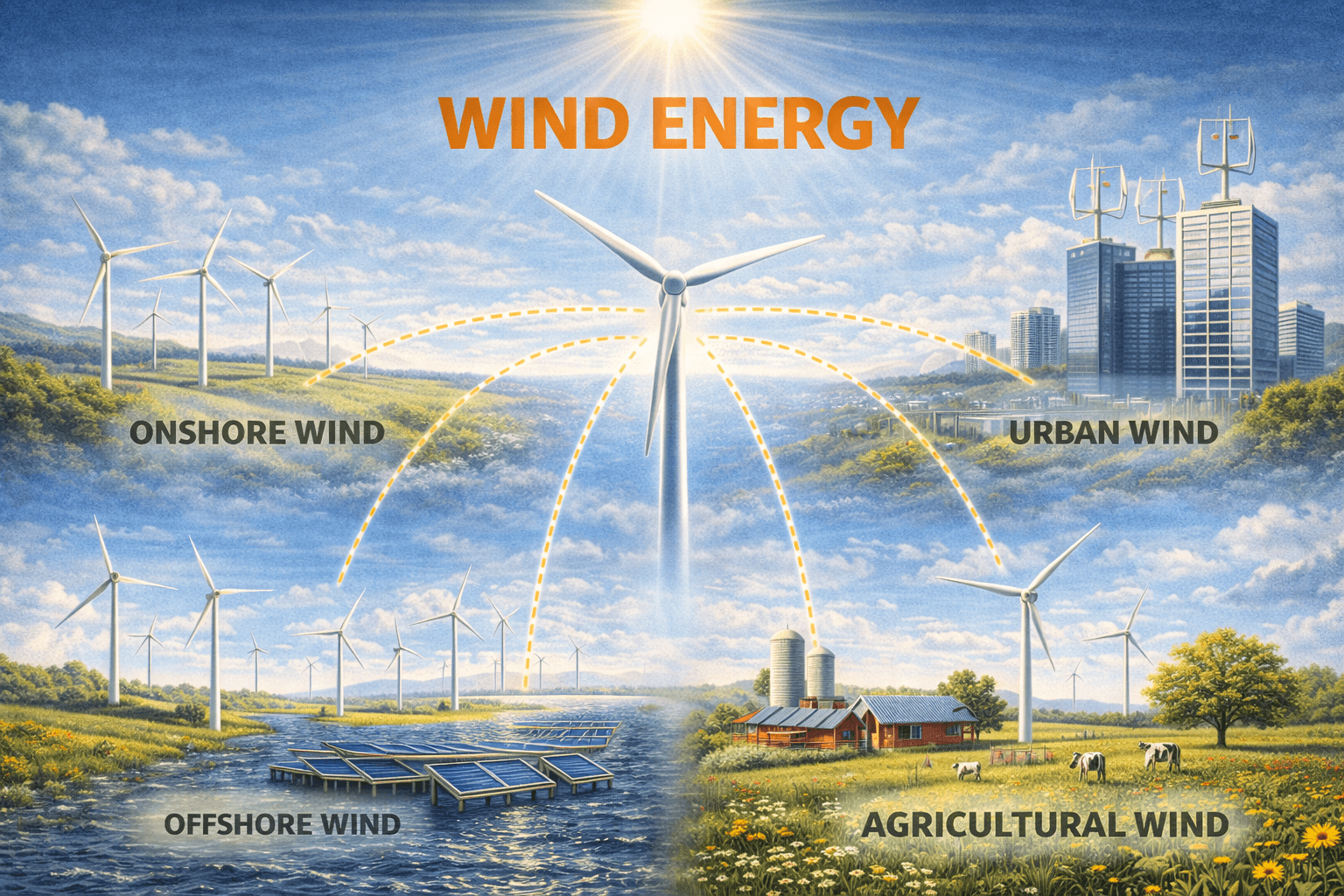
Wind energy has become one of the fastest-growing sources of electricity generation worldwide. Advances in turbine technology, declining costs, and supportive policy frameworks have enabled wind power to expand rapidly across many regions.
Modern wind turbines convert the kinetic energy of moving air into electricity through large rotor blades connected to generators. As wind speeds rotate the blades, mechanical energy is converted into electrical power that can be fed directly into the electricity grid.
Over the past decade, wind energy capacity has expanded dramatically. Countries in Europe, Asia, and North America have significantly increased both onshore wind installations and offshore wind farms, which take advantage of stronger and more consistent winds at sea.
Technological innovation — Technological innovation has played a major role in this growth. New turbine designs feature taller towers and longer blades, allowing turbines to capture more wind energy and operate efficiently even in lower wind conditions.
Offshore wind technology has also advanced rapidly, with some turbines now exceeding 15 megawatts of capacity per unit, making them among the largest electricity generators ever built.
Wind energy also offers significant environmental benefits. During operation, wind turbines produce electricity without emitting greenhouse gases or air pollutants.
However, integrating large volumes of wind energy into electricity systems requires modern grid infrastructure, energy storage, and advanced forecasting systems. Grid operators increasingly use weather prediction models and digital monitoring technologies to anticipate wind generation patterns and maintain stable electricity supply.
The landscape depicted in the image reflects the growing presence of wind farms within modern power systems. As countries continue to decarbonize electricity generation, wind power is expected to remain a central pillar of the global renewable energy transition.