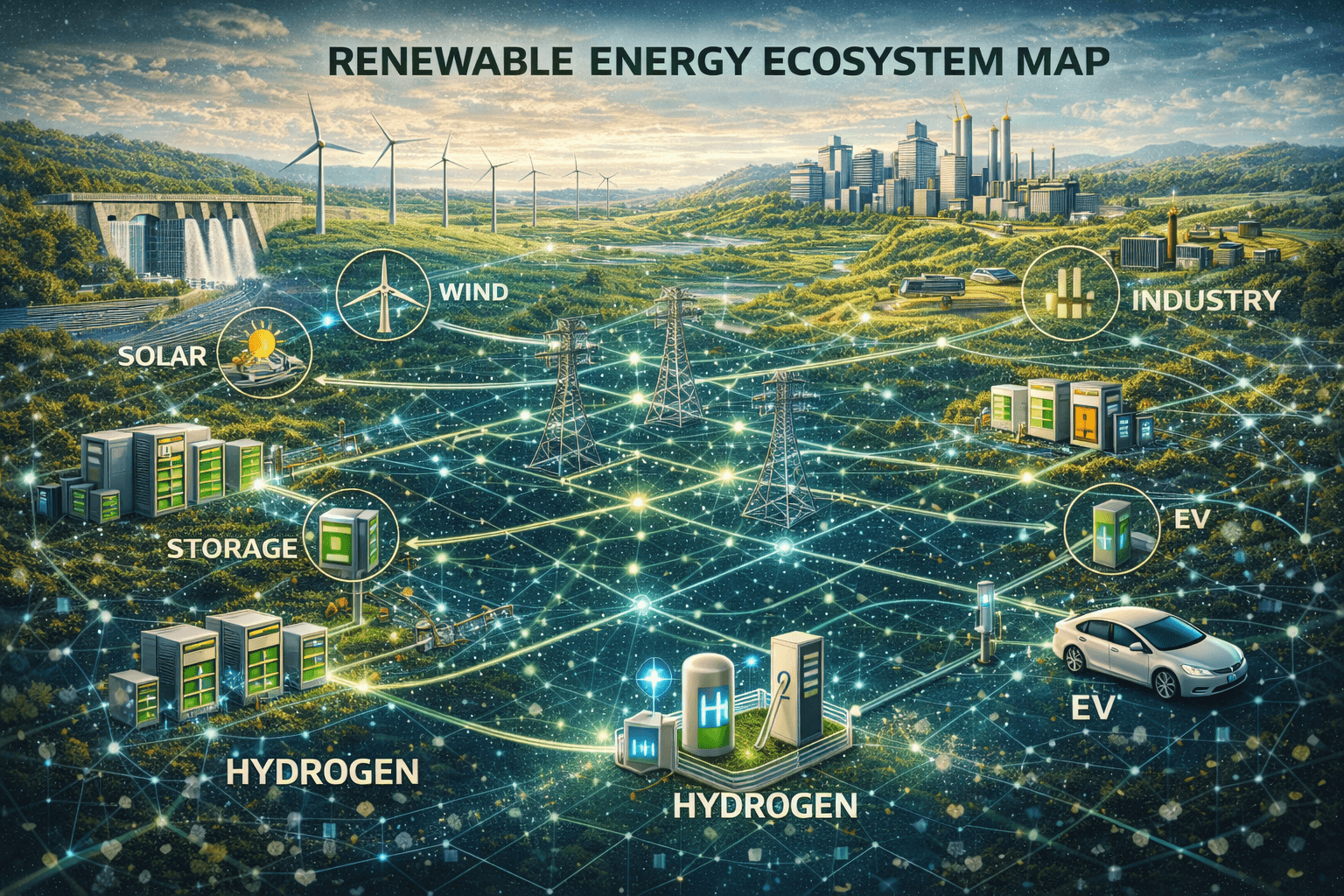
Turkey's energy transition is entering a second phase: not just adding more wind and solar, but connecting these sources with storage, transmission infrastructure, cross-border trade and industrial use in a single system. The National Energy Plan targets total installed capacity reaching 189.7 GW by 2035; within that, solar at 52.9 GW, wind at 29.6 GW, and renewables reaching 64.7% of total installed capacity. The same plan sets a 5 GW electrolyser capacity target for hydrogen by 2035.
Storage is becoming the critical link in this bigger picture. In his end-2025 assessment, Energy Minister Bayraktar said he expected storage-related renewable capacities to come online from 2026, with roughly 2,000–3,000 MW of new capacity potentially activating. In a separate statement he noted that 33,500 MW of storage capacity interest had formed on the investor side and that at least 2,000 MW of investment could move in 2026. This shows that not only installed capacity but also flexibility infrastructure is being scaled up for renewables to reach higher shares in the system.
The second component of the energy ecosystem is cross-border connections. In April 2025, a "Green Electricity Transmission and Trade" memorandum was signed between Turkey, Azerbaijan, Georgia and Bulgaria. According to the Ministry, the aim is to transport solar and wind electricity from Azerbaijan–Georgia–Turkey–Bulgaria to Europe. The same process included an operating agreement for modernising the transmission infrastructure between Turkey and Nakhchivan and for more efficient use of the existing interconnector with 75 MW import / 40 MW export capacity.
The Energy Efficiency 2030 Strategy and 2nd National Energy Efficiency Action Plan foresee the spread of low-carbon and digital transformation in industry, the expansion of energy monitoring systems, improved regulatory alignment for alternative gases and hydrogen, and the rollout of smart meters from 2026. This shows the transition is not only in electricity generation but also in end-use, toward a more grid-connected, data-generating and optimisable structure.
Turkey's advantage in the international framework is that it can combine this ecosystem approach with a regional energy corridor role. Ministry statements indicate that roughly $30 billion in transmission infrastructure is planned by 2035 and that strengthening European connections is targeted. The new energy system should therefore be read as production + storage + transmission + trade + industry integration. The image describes exactly this architecture: the energy transition is no longer a single-technology story but the construction of an interconnected ecosystem.