Solar energy has become one of the most dynamic components of Turkey's renewable energy transition. Driven by declining technology costs, favorable solar resources, and supportive policy mechanisms, solar installations across the country have expanded dramatically in recent years.
According to official energy statistics, solar capacity now represents a rapidly increasing share of Turkey's installed electricity generation capacity. Thousands of new solar installations—ranging from distributed rooftop systems to large-scale solar farms—have been added across the country.
Turkey's geographical location provides strong solar potential, particularly in the central Anatolian plateau and southern regions. These areas receive high levels of solar irradiation, making photovoltaic electricity generation both technically efficient and economically competitive.
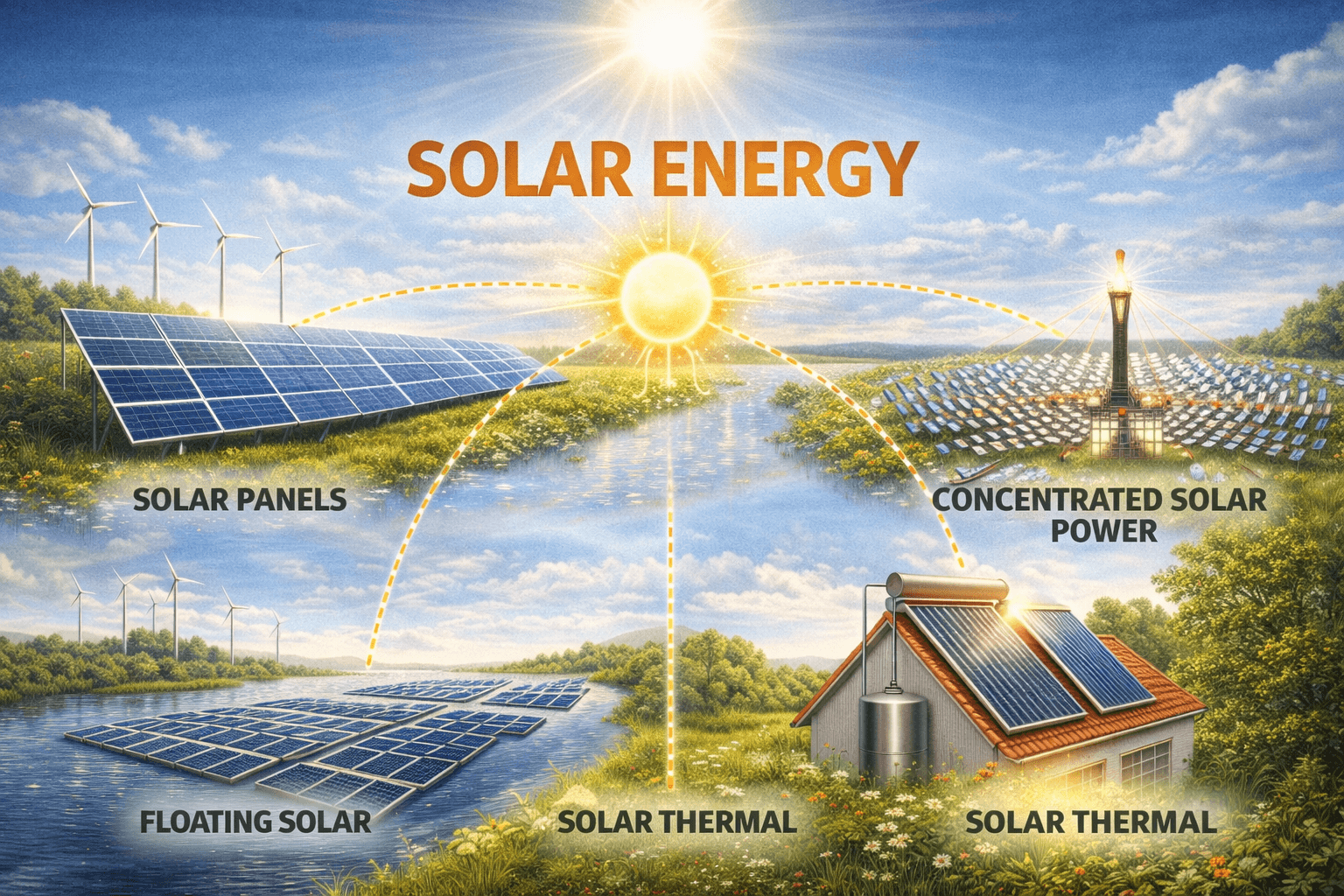
Technology segments — Solar technologies used in Turkey can be broadly categorized into several segments. The most common form is photovoltaic solar panels, which convert sunlight directly into electricity. These systems are widely used both at utility scale and in distributed installations on residential and commercial buildings.
Another emerging technology is concentrated solar power (CSP), which uses mirrors to focus sunlight and generate thermal energy that can drive turbines. Although CSP deployment in Turkey remains limited, it represents a potential option for large-scale solar generation combined with thermal storage.
Floating solar installations are also gaining attention globally. These systems are deployed on water surfaces such as reservoirs and can reduce land-use conflicts while improving panel efficiency through cooling effects.
In addition, solar thermal systems are widely used in Turkey for water heating. Turkey has historically been one of the world's largest markets for solar thermal collectors used in residential heating applications.
The rapid expansion of solar energy is expected to continue as part of Turkey's long-term energy strategy. Government plans envision significant increases in solar capacity over the coming decade as the country seeks to reduce fossil fuel imports and strengthen energy security.
Globally, solar energy has also become the fastest-growing electricity source. According to international energy analyses, solar power has recently surpassed several conventional technologies in annual capacity additions worldwide. As solar technologies continue to mature and costs decline, their role in electricity systems is expected to expand even further.