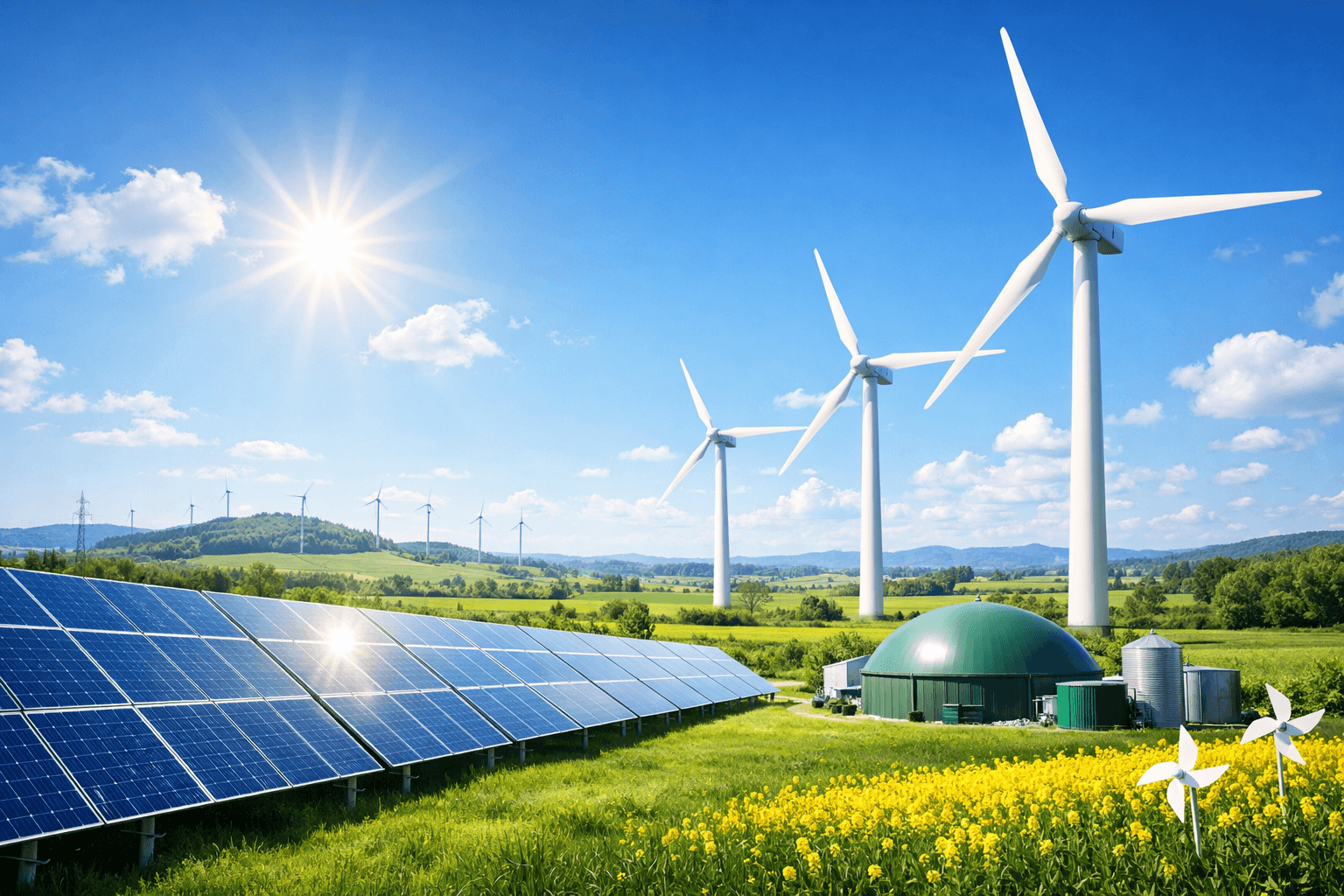
The relationship between renewable energy deployment and nature conservation is increasingly central to the energy transition debate. Well-designed solar, wind, and hydro projects can coexist with ecosystems and even deliver net biodiversity benefits when planned with care.
Land use — Solar farms can be deployed on degraded land, brownfields, or integrated with agriculture (agrivoltaics). Wind turbines often occupy less than 5% of the land surface, leaving the rest for grazing or habitat. Proper siting avoids sensitive areas and migration corridors.
Biodiversity — Best practices include habitat restoration around project sites, pollinator-friendly solar plantings, and fish-friendly turbine designs for hydro. Environmental impact assessments and mitigation hierarchies are standard in many jurisdictions.
Community engagement — Local communities benefit from jobs, tax revenue, and community ownership schemes. Transparent engagement and co-benefits (e.g., irrigation access for hydro projects) improve social acceptance and long-term sustainability.
This research aligns with the platform's focus on Turkey's energy transition pathways that balance economic, environmental, and social objectives.