Bioenergy is gaining renewed attention as countries explore diversified renewable energy portfolios capable of supporting both electricity generation and decarbonization of hard-to-electrify sectors.
Unlike solar and wind power, which rely on natural flows of sunlight and wind, bioenergy uses organic materials—such as agricultural waste, forestry residues, and organic municipal waste—to produce usable energy. This makes bioenergy particularly attractive for regions with large agricultural sectors.
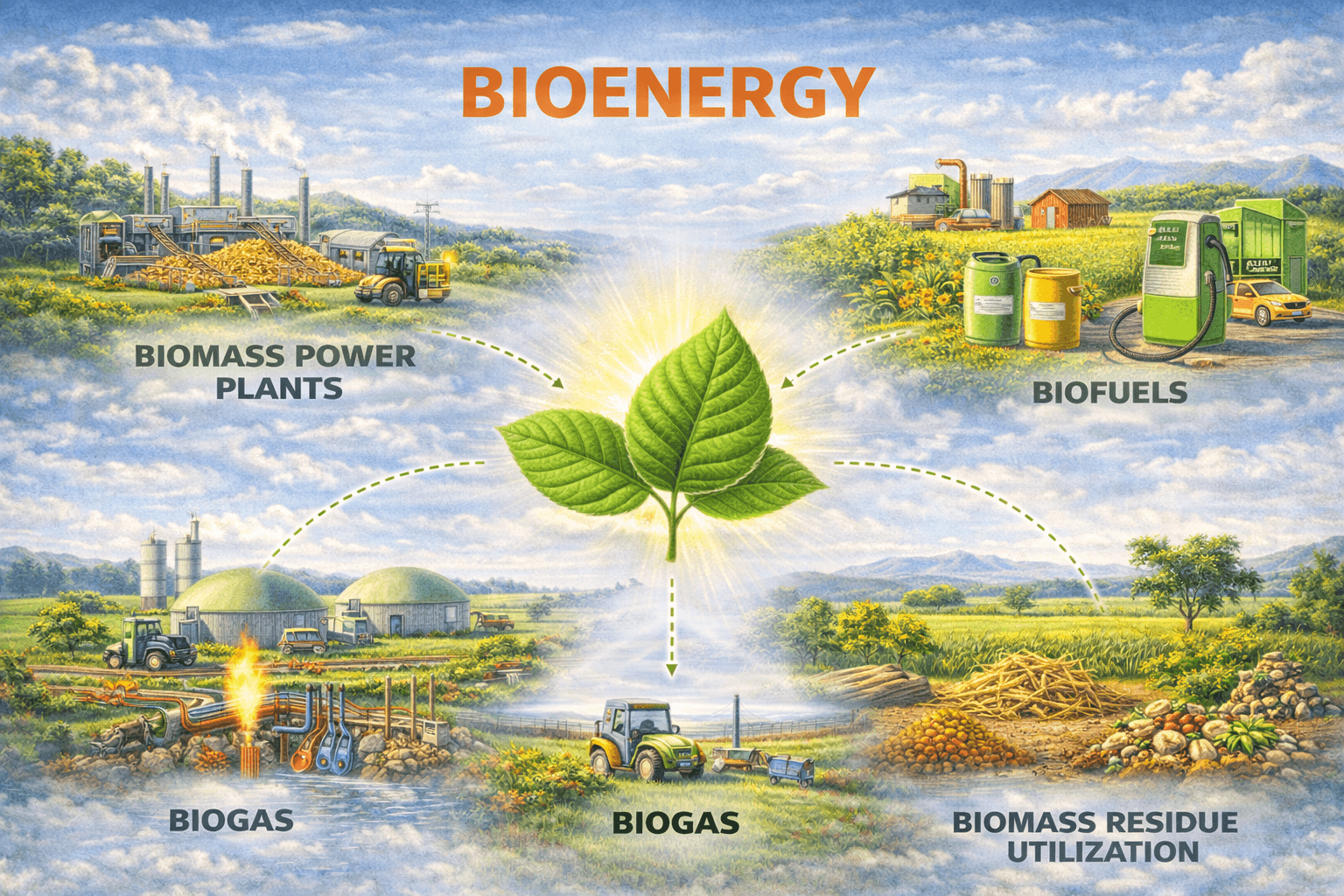
Major pathways — Several major bioenergy pathways are currently used around the world. Biomass power plants convert organic materials into electricity through combustion or gasification processes. These plants can generate stable power output and complement variable renewable sources such as solar and wind.
Another major pathway is biogas production, where organic waste decomposes in anaerobic digesters to produce methane-rich gas. Biogas can be used for electricity generation, heating, or upgraded into biomethane for use in gas networks.
Biofuels, including biodiesel and ethanol, are widely used in the transportation sector. These fuels can partially replace petroleum-based fuels and reduce lifecycle carbon emissions when sustainably produced.
Waste management — Bioenergy also offers an important advantage in energy systems: it can help manage waste streams. Agricultural residues, food waste, and municipal organic waste can be converted into energy instead of being disposed of in landfills.
However, the expansion of bioenergy must be carefully managed to ensure sustainability. Large-scale biomass production can compete with food production or lead to land-use changes if not properly regulated. For this reason, many countries are focusing on residue-based bioenergy, where waste materials are used as feedstock.
In future energy systems, bioenergy is expected to play a complementary role alongside solar, wind, and hydropower, contributing to a diversified renewable energy mix.