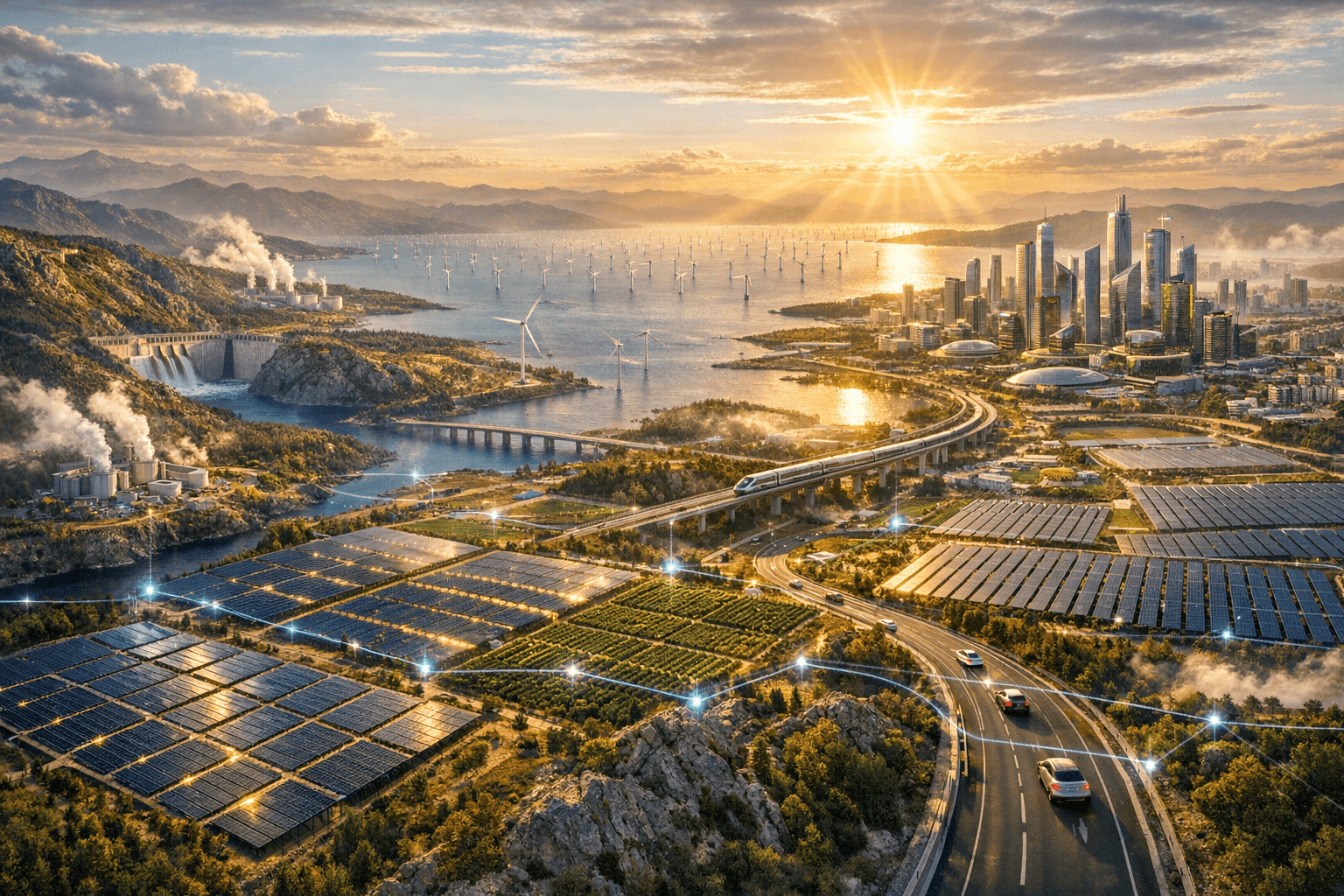
The global energy transition is not only transforming how electricity is generated—it is also changing how energy systems are managed. Artificial intelligence is increasingly playing a central role in forecasting demand, optimizing power flows, and integrating renewable energy sources into the grid.
Modern electricity systems are becoming far more complex than traditional fossil-fuel-based networks. Wind and solar generation are inherently variable, meaning that power output depends on weather conditions rather than controllable fuel inputs. This variability requires advanced forecasting tools capable of predicting generation patterns and balancing supply with demand in real time.
AI capabilities — Artificial intelligence models are particularly well suited to this challenge. Machine learning algorithms can analyze large volumes of historical weather, demand, and grid data to generate more accurate forecasts than traditional statistical models.
In Turkey, the rapid expansion of solar and wind capacity is increasing the importance of these digital tools. According to official statistics, renewable sources now represent a large and growing share of installed power capacity. As the share of intermittent generation rises, grid operators must rely on sophisticated forecasting systems to ensure stability and reliability.
Layered architecture — AI-driven energy management systems typically operate through several layers. At the forecasting layer, machine learning models predict solar irradiance, wind speeds, and electricity demand. These predictions feed into grid management platforms that determine optimal dispatch strategies.
At the optimization layer, advanced algorithms determine how power plants, energy storage systems, and transmission networks should operate in order to minimize costs and emissions while maintaining grid reliability.
Finally, at the policy and planning layer, AI models can support long-term investment decisions by simulating energy system scenarios under different policy and technology assumptions.
Research directions — Researchers increasingly combine reinforcement learning techniques with power system simulations to identify optimal energy transition strategies. These models can simultaneously evaluate multiple objectives such as cost efficiency, emissions reduction, and energy security.
The integration of artificial intelligence into energy infrastructure therefore represents one of the most important technological shifts in modern electricity systems. As renewable penetration increases, AI is expected to become a core component of future smart energy systems.