Renewable energy is increasingly recognized not only as a technological solution for electricity generation but also as a fundamental component of sustainable environmental systems.
Across the world, countries are expanding solar, wind, and hydropower capacity in response to rising electricity demand, climate concerns, and the need to reduce dependence on fossil fuels.
Unlike conventional energy sources, renewable technologies interact differently with natural ecosystems. Solar panels generate electricity from sunlight without emitting greenhouse gases during operation, while wind turbines convert atmospheric kinetic energy into power. Hydropower facilities harness the natural flow of water to produce electricity, often supporting irrigation, flood control, and water management systems simultaneously.
This integrated relationship between energy and nature is becoming increasingly important as global electricity consumption continues to grow. According to the International Energy Agency, global electricity demand is expected to rise significantly over the coming decades, driven by electrification of transportation, industrial processes, and heating systems. Meeting this demand while limiting environmental impacts requires expanding renewable generation capacity.
Sustainability goals — Renewable energy technologies are also closely connected to broader sustainability goals. By reducing air pollution and greenhouse gas emissions, clean electricity contributes to improved public health, ecosystem protection, and long-term climate stability.
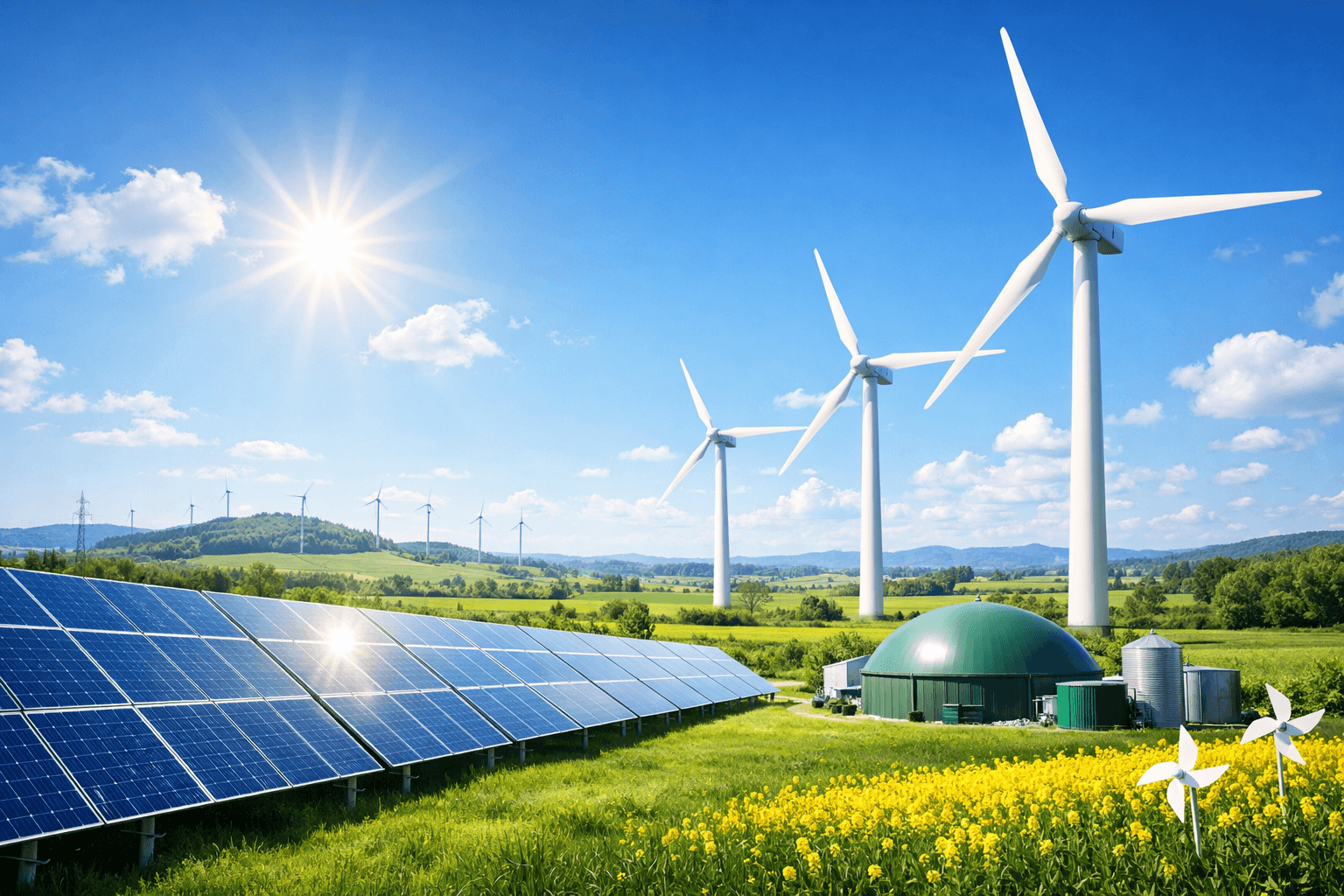
The visual representation of renewable energy integrated with natural landscapes reflects this emerging paradigm: an energy system that works alongside natural ecosystems rather than degrading them.
As countries continue to accelerate renewable energy deployment, the transition toward cleaner electricity systems is increasingly seen as essential not only for energy security but also for protecting biodiversity and supporting sustainable human development.