Energy security has traditionally been associated with access to stable supplies of fossil fuels such as oil, natural gas, and coal.
However, recent geopolitical events and energy market volatility have highlighted the vulnerabilities associated with heavy reliance on imported fossil fuels. As a result, many countries are accelerating the deployment of renewable energy technologies as part of broader energy security strategies.
Solar power, wind energy, and battery storage systems allow countries to generate electricity domestically using natural resources that are locally available. This reduces exposure to global fuel price fluctuations and supply disruptions.
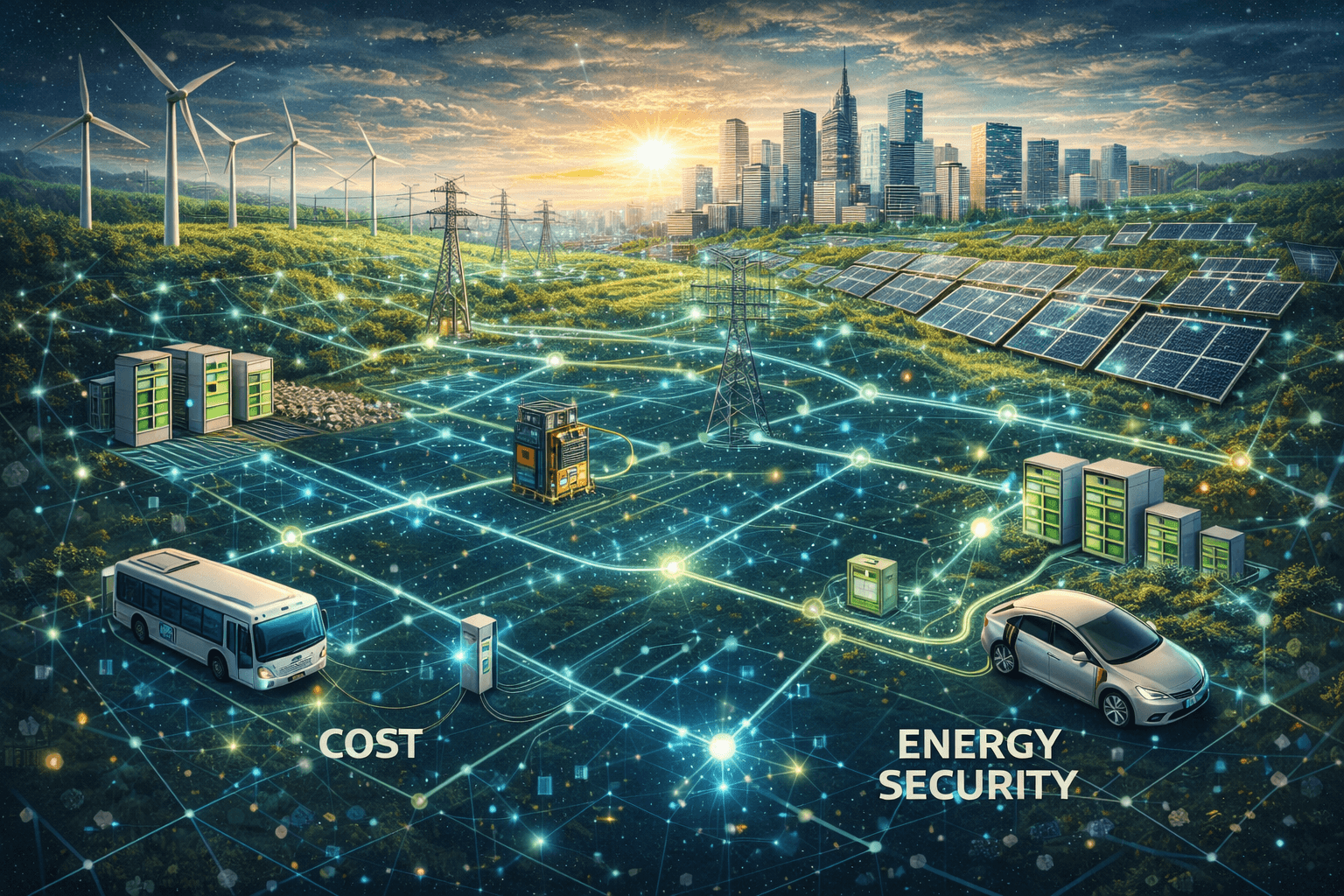
Smart energy networks — Modern renewable energy systems are increasingly integrated into smart energy networks that combine generation, storage, and digital control technologies. These networks can include solar farms and rooftop solar installations, wind power plants, grid-scale battery storage, electric vehicle charging infrastructure, and digital electricity management systems.
Together, these components form interconnected energy systems capable of balancing electricity supply and demand in real time.
Energy storage technologies are particularly important for enhancing system reliability. Batteries can store excess electricity generated during periods of high renewable output and release it during times of higher demand. Electric vehicles can also contribute to energy system flexibility through vehicle-to-grid technologies, where parked vehicles temporarily supply electricity back to the grid.
The integrated energy landscape illustrated in the image reflects the emerging architecture of future electricity systems: decentralized, digitalized, and increasingly renewable. As energy systems evolve, renewable technologies are expected to play a crucial role in strengthening long-term energy security.