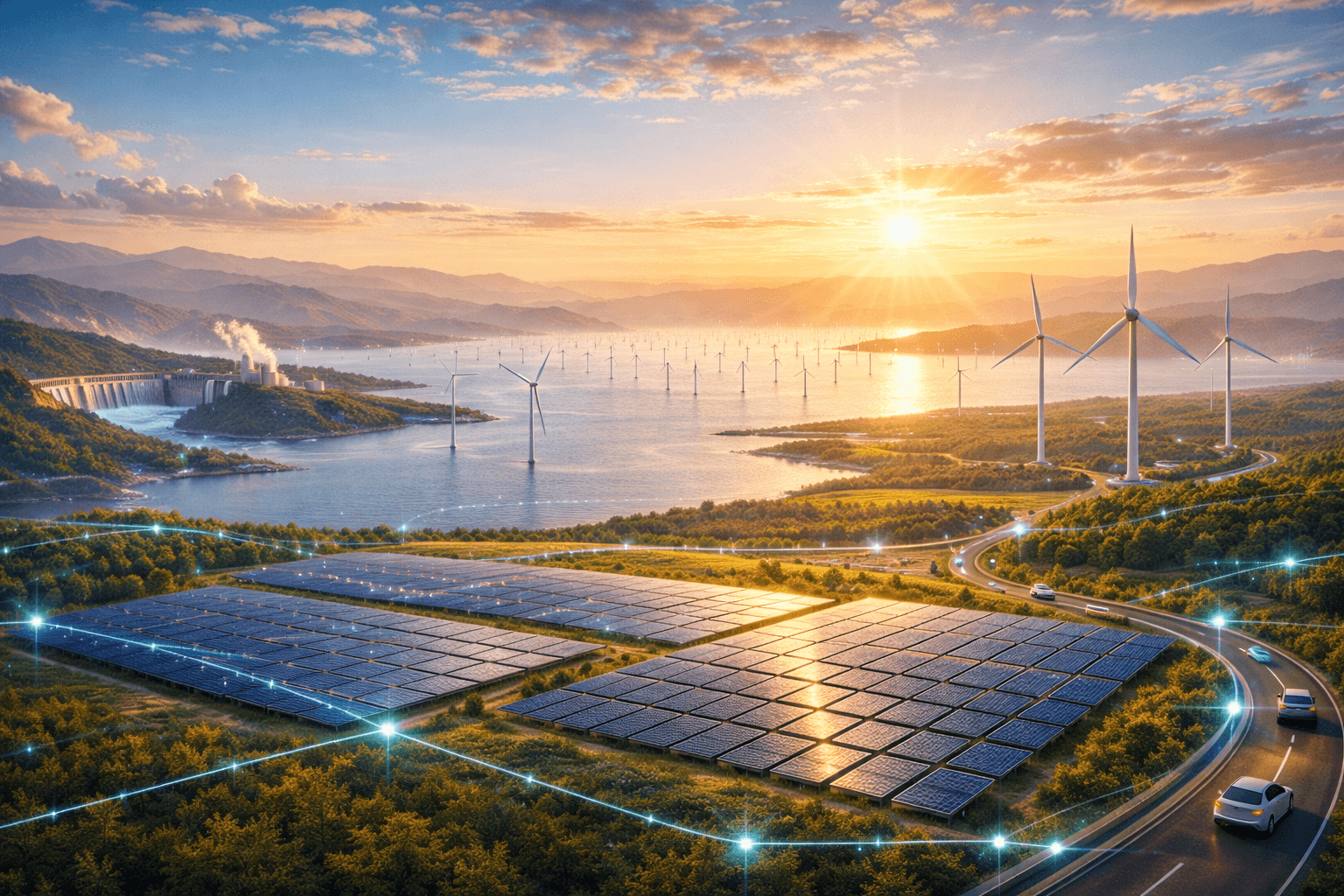
The global energy system is undergoing a structural transformation as renewable energy infrastructure expands across continents.
Large solar farms, offshore and onshore wind parks, and modern hydropower facilities are increasingly becoming the backbone of electricity systems. In many countries, renewable capacity additions now exceed those of fossil-fuel power plants.
According to international energy data, solar and wind have become the fastest-growing sources of new electricity generation worldwide.
Transmission and digitalization — Large renewable installations are typically connected through advanced transmission networks that allow electricity to flow across regions. These interconnected power systems help balance supply and demand, particularly when variable renewable generation fluctuates due to weather conditions.
Modern electricity grids are also becoming more digitalized. Sensors, smart meters, and real-time monitoring systems allow grid operators to track electricity flows and optimize network performance.
Energy storage technologies such as large-scale batteries and pumped-storage hydropower further enhance grid flexibility by storing surplus electricity and releasing it when demand increases.
Smart renewable grid — The combination of renewable generation, digital grid infrastructure, and energy storage is forming a new type of electricity system often referred to as a smart renewable grid.
The landscape illustrated represents this integrated system: solar farms generating electricity during daylight hours, wind turbines producing power from atmospheric flows, and hydropower providing stable generation and grid balancing. Together, these technologies are redefining how electricity systems operate in the 21st century.