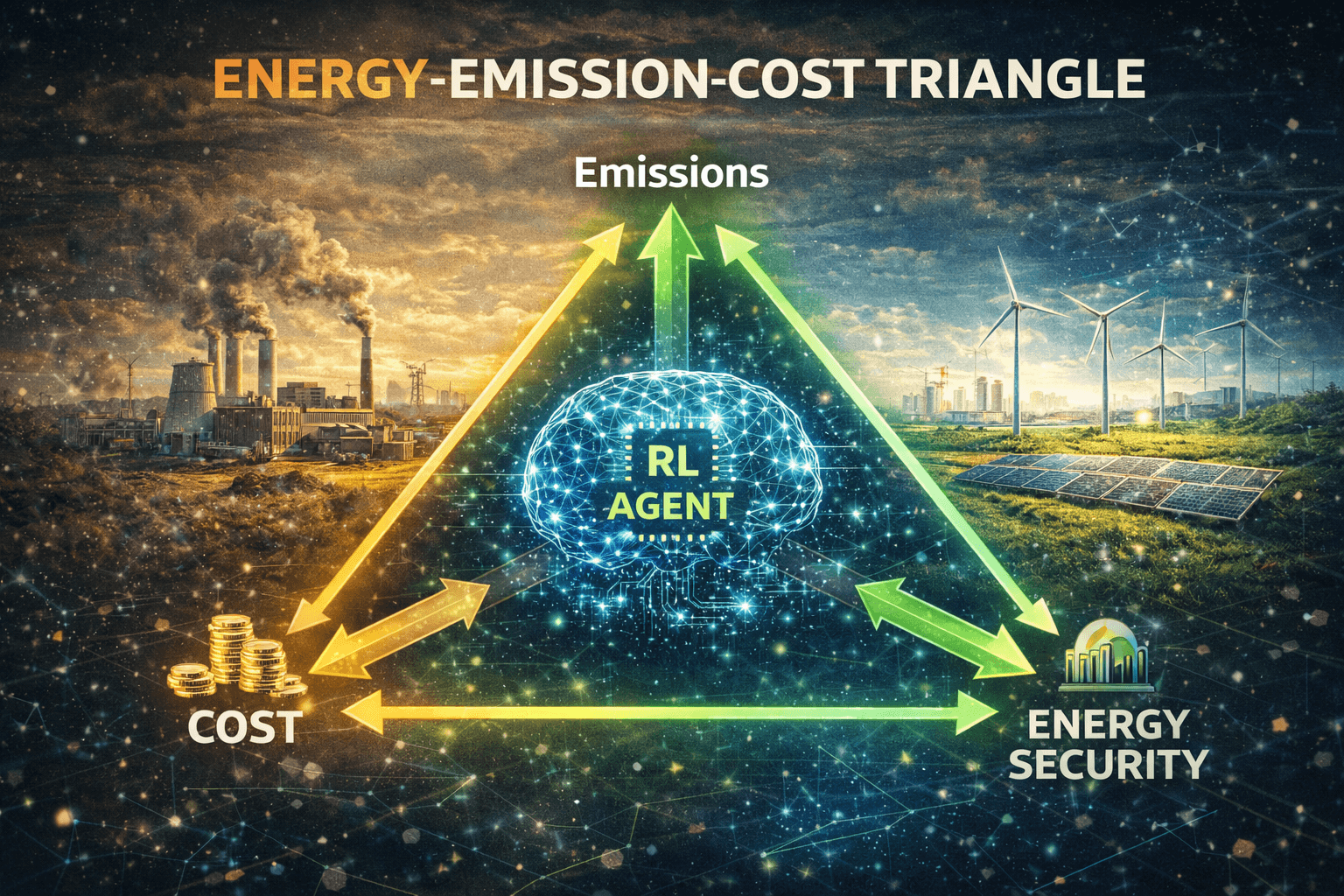
Energy transition policies around the world increasingly focus on solving a complex balancing problem often referred to as the energy trilemma.
This framework describes the challenge of simultaneously achieving three major objectives: affordable energy costs, low carbon emissions, and reliable and secure energy supply.
Historically, energy systems prioritized cost efficiency and supply stability, often relying heavily on fossil fuels such as coal, oil, and natural gas. However, growing concerns about climate change and environmental sustainability have added a third critical dimension: reducing greenhouse gas emissions.
Renewable solutions — Renewable energy technologies have become central to addressing this challenge. Solar and wind power generate electricity with minimal operational emissions, helping reduce the carbon footprint of electricity systems. At the same time, renewable energy costs have declined significantly over the past decade, making clean electricity increasingly competitive with conventional power generation.
Despite these advances, energy systems must still ensure reliability and security. Electricity demand fluctuates throughout the day, and renewable generation can vary depending on weather conditions.
To address this challenge, modern electricity systems rely on a combination of technologies including energy storage systems, flexible power plants, demand response mechanisms, smart electricity grids, and advanced forecasting models.
AI and optimization — In addition, artificial intelligence and machine learning tools are increasingly used to optimize energy system operation. These technologies can analyze large volumes of energy data and support decision-making processes related to electricity generation planning, grid management, and policy design.
The triangular structure illustrated in the image represents the fundamental balancing act at the heart of modern energy policy. Achieving a stable equilibrium between cost, emissions reduction, and energy security remains one of the defining challenges of the global energy transition.