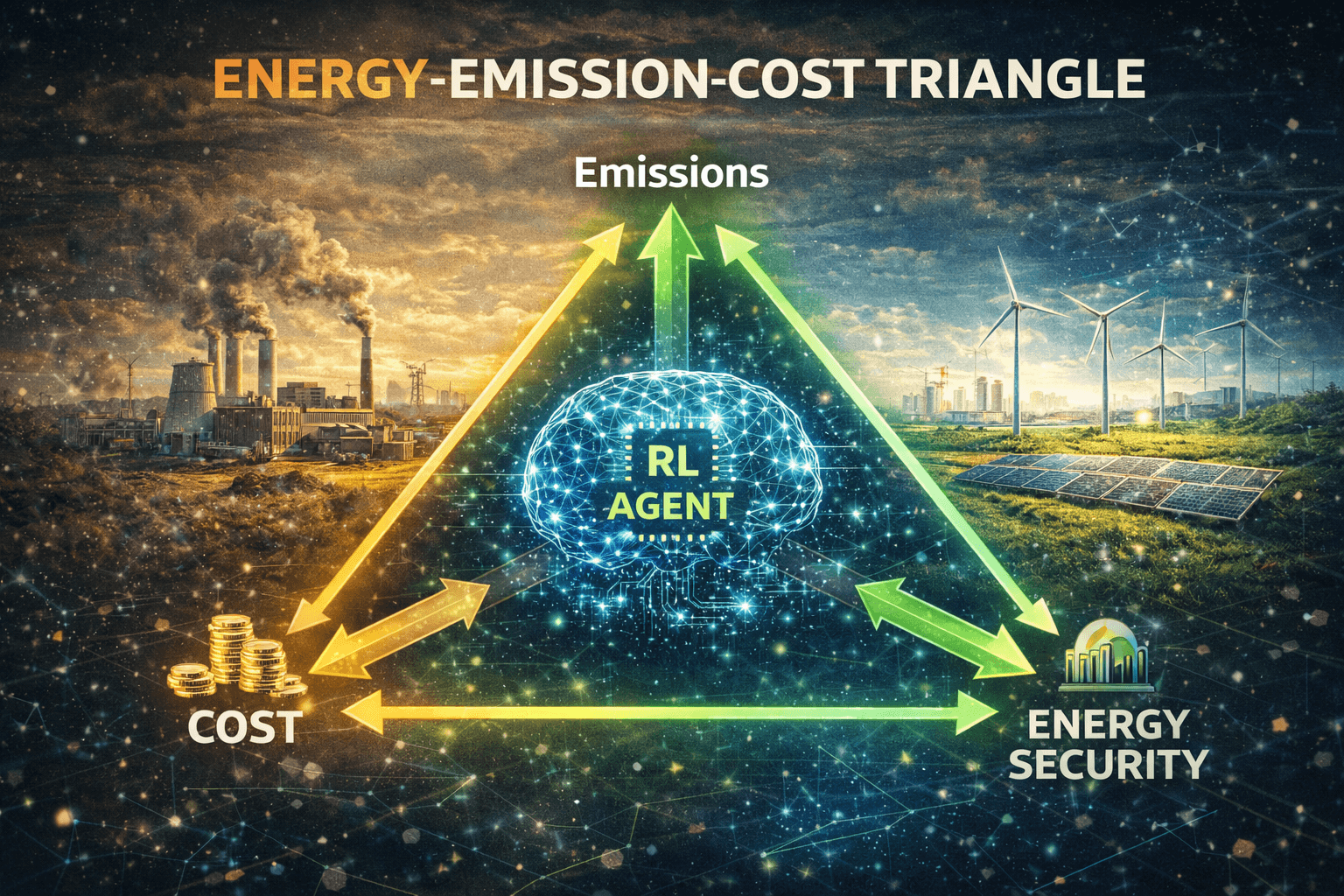
Energy policy decisions increasingly revolve around a complex trade-off between three central objectives: economic cost, environmental sustainability, and energy security. This relationship is often described as the energy trilemma.
Three dimensions — The first dimension of the trilemma concerns economic cost. Electricity must remain affordable for households and industries in order to sustain economic growth and maintain social stability.
The second dimension involves emissions reduction. Energy systems are responsible for a large share of global greenhouse gas emissions, making decarbonization essential for addressing climate change.
The third dimension is energy security. Countries must ensure that energy supplies remain reliable and resilient in the face of geopolitical risks, market volatility, and infrastructure disruptions.
Balancing these objectives is increasingly difficult during the energy transition. Rapid decarbonization requires large investments in renewable energy infrastructure, electricity networks, and energy storage technologies. These investments can temporarily increase system costs before long-term savings emerge. At the same time, geopolitical events have highlighted the importance of reducing dependence on imported fossil fuels.
Renewable solutions — Renewable energy technologies offer an opportunity to address multiple elements of the energy trilemma simultaneously. Solar and wind power can reduce emissions while strengthening domestic energy supply. However, integrating large shares of intermittent renewable generation introduces new challenges related to grid management and system flexibility.
Advanced analytical tools, including artificial intelligence and energy system optimization models, are increasingly used to explore solutions to this complex balancing problem. By simulating different policy scenarios and investment pathways, these models help policymakers evaluate trade-offs between cost, emissions, and reliability.
The energy transition therefore represents not only a technological transformation but also a complex policy optimization challenge.